
AIRIS
A Work in Flux
AIRIS travels.
And with every place, it changes.
The story of AIRIS does not begin with AIRIS.
One of its traces leads back to LICHT(e)WEGE in Kassel, 2014. It was there that the form of the eye first appeared in my work as IRIDO, a homage to my friend Zeev Pancer, scientist and researcher.
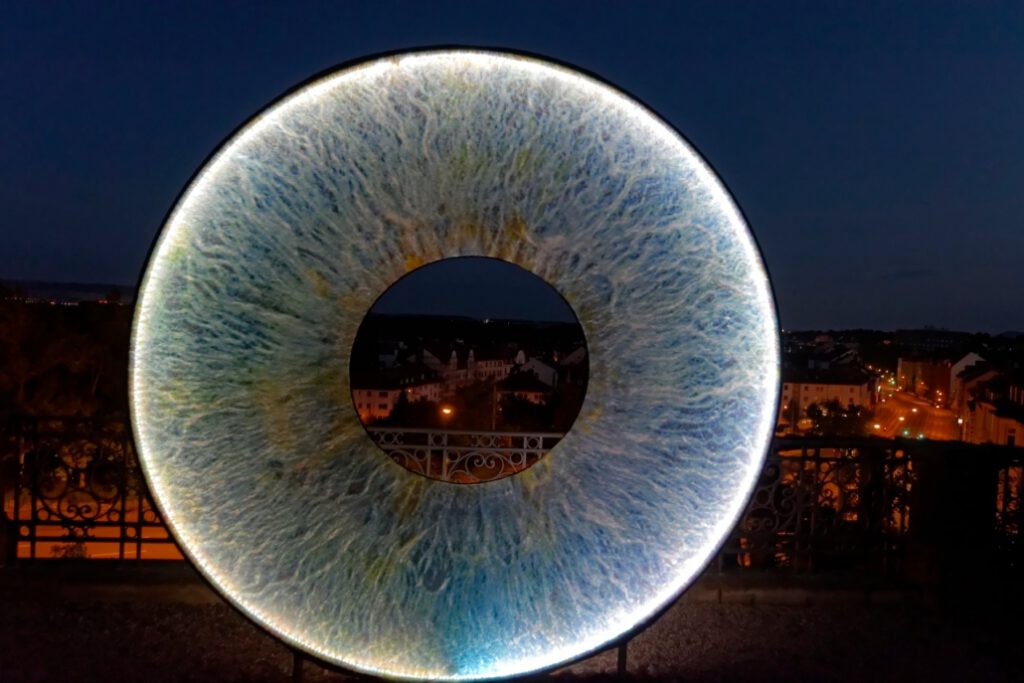
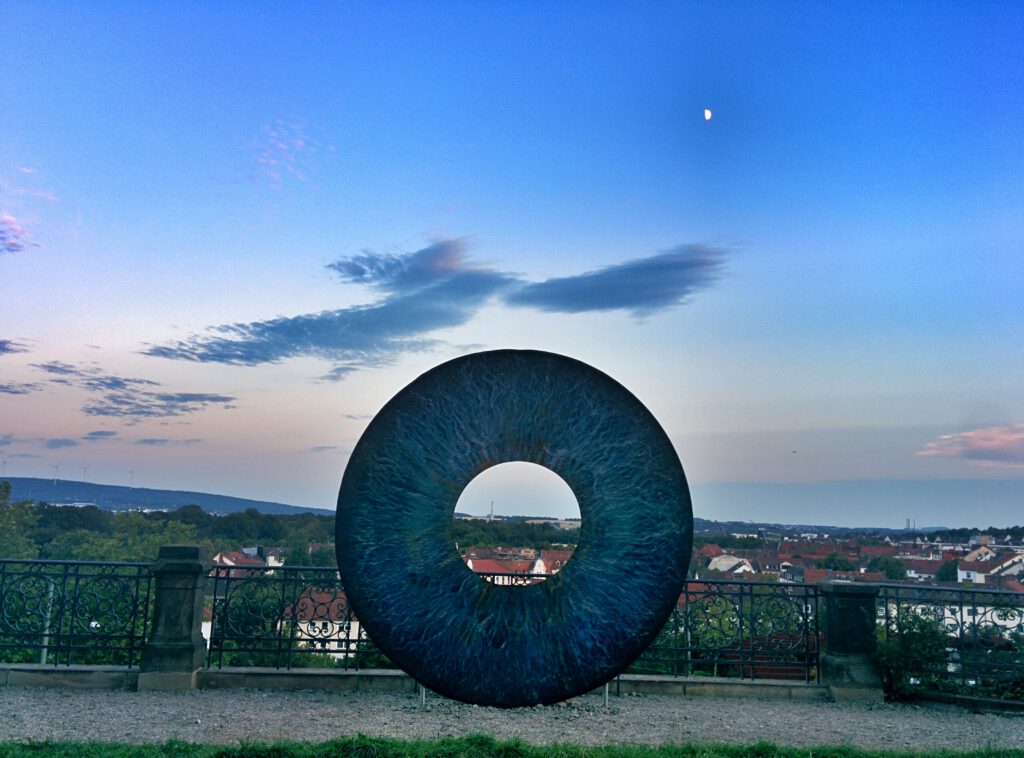
Zeev is no longer here.
Our dialogue is.
His thoughts, his scientific curiosity, our conversations and our friendship continue to accompany me. Not as a monument. Not as a memory frozen in time. More like a voice that continues to ask questions. Perhaps also the desire not to believe an answer too quickly.
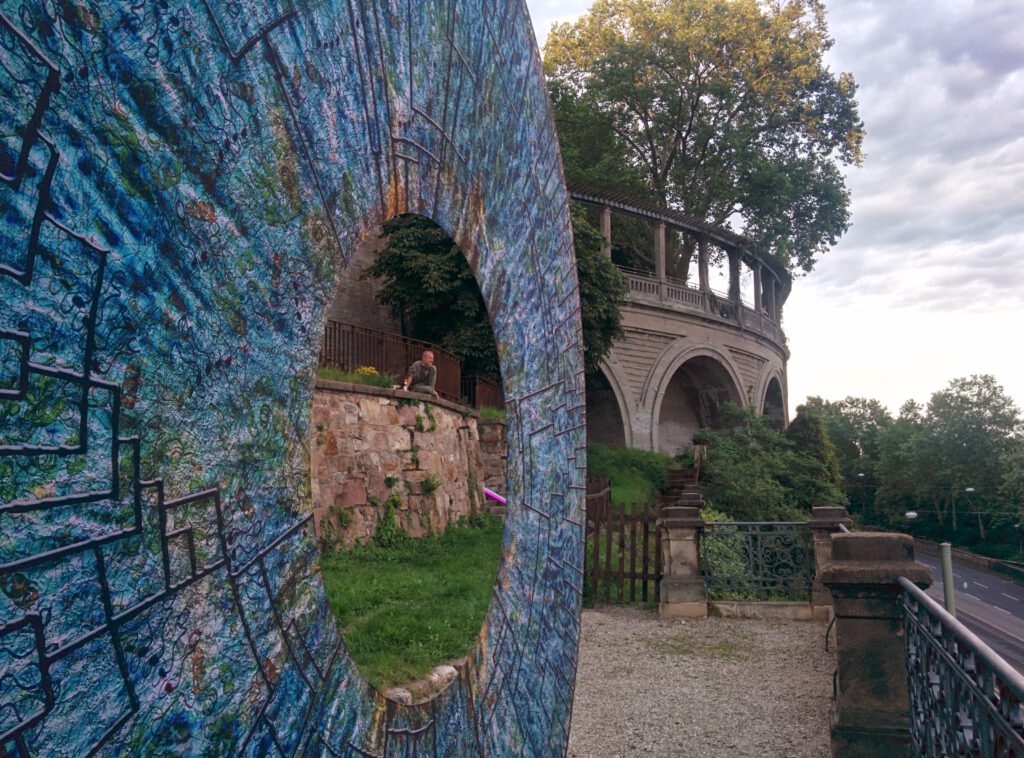
Years later, the form returned.
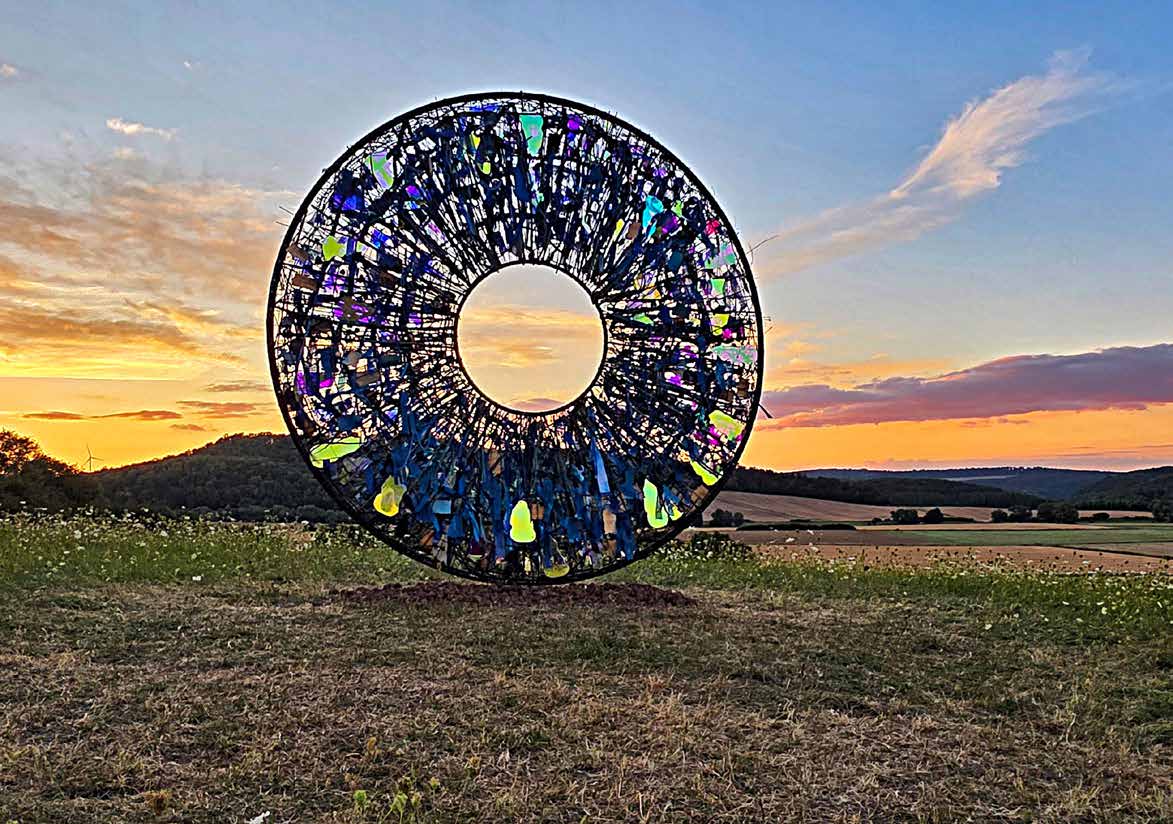
Zierenberg · 2025
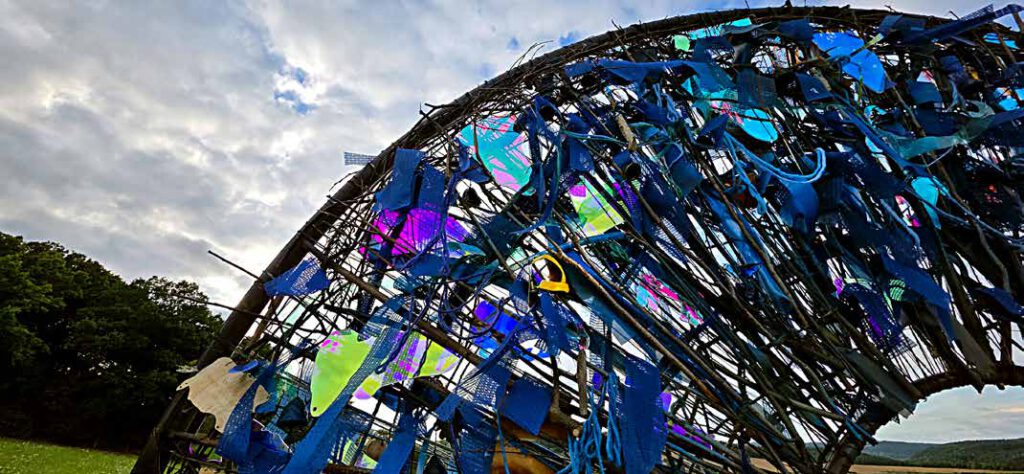
In Zierenberg, at the wind art festival “Bewegter Wind” (17–31 August 2025), the eye became AIRIS – the breathing eye.
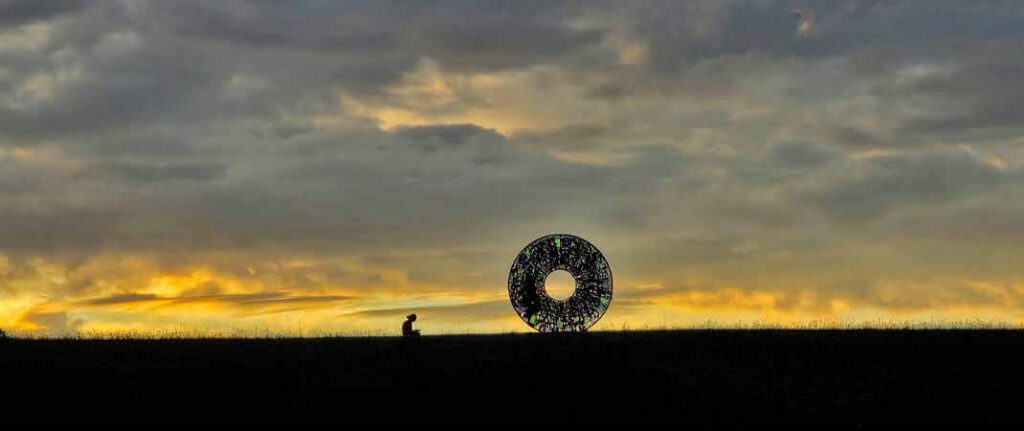
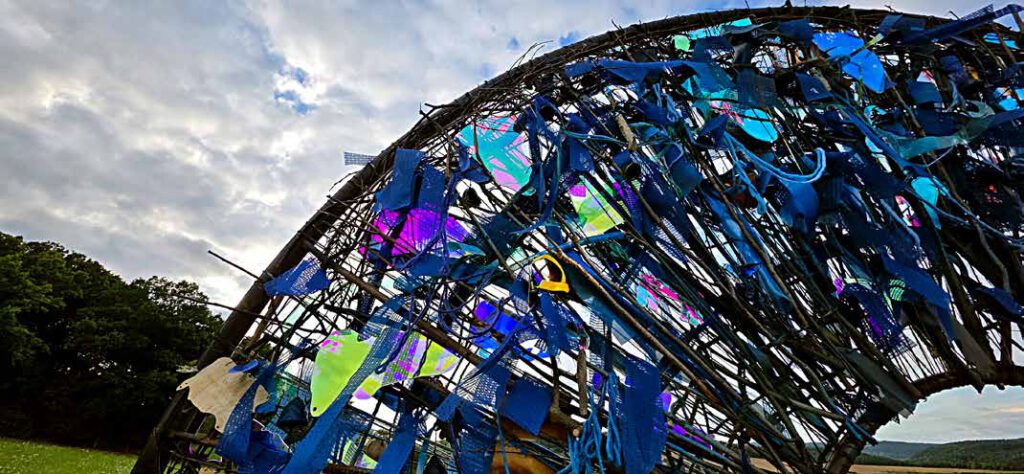
There, AIRIS was above all exposed to the wind.
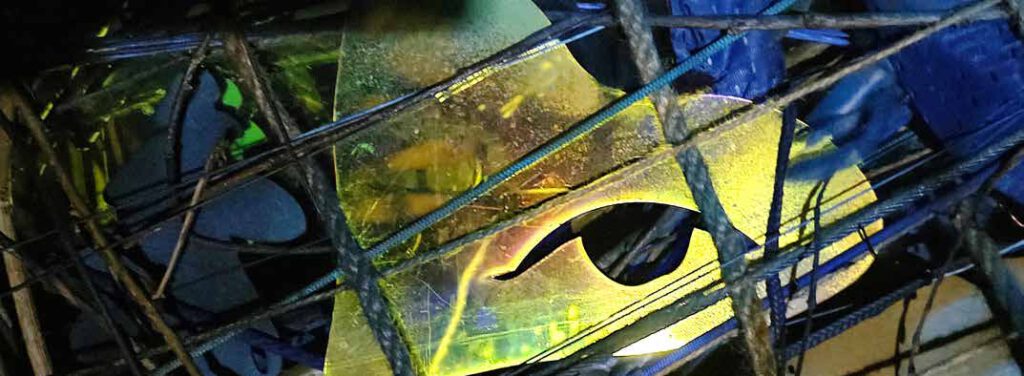
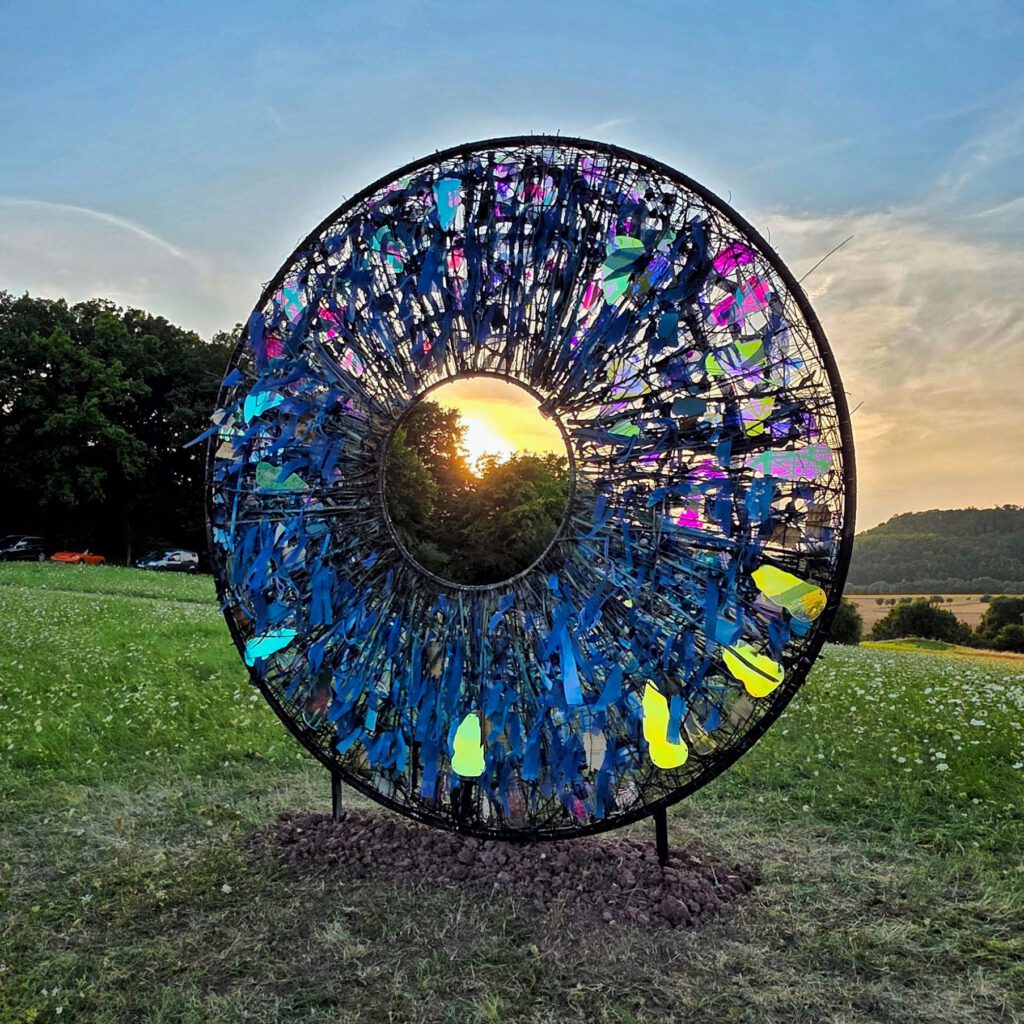
The wind moved the material. It changed surface, form and perception. Landscape appeared through the eye and disappeared again.
AIRIS became part of its place.
And the place became part of AIRIS.
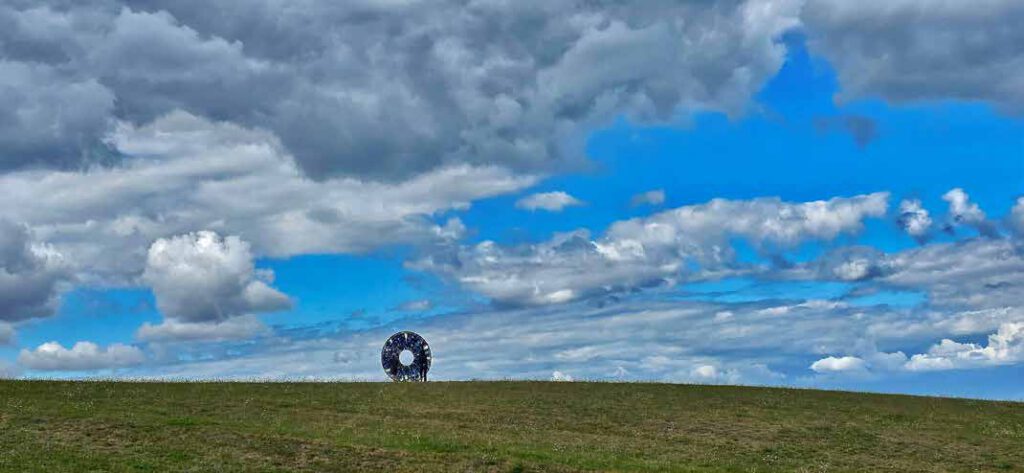
The wind gave rise to questions of seeing:
The wind paints. The gaze decides.
AIRIS sees outward and inward.
What you see looks back at you.
What is moving the work or the world?
The wind could not be held.
Perhaps that is where the transformation of AIRIS began.
Not every thought becomes part of the visible work. Some stay. Some disappear. Some reappear somewhere else – and suddenly mean something different.
7 October
After Zierenberg, AIRIS changed again.
This time, the object itself did not travel.
AIRIS became part of a publication connected to October 7.
Suddenly, the eye was looking into another landscape: origin, memory, wounds, belonging, and the question of how we look at one another.
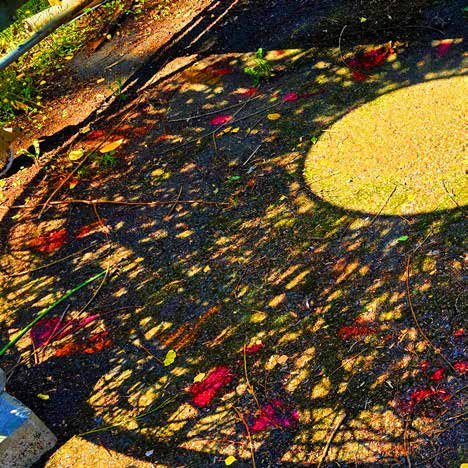
Thoughts about wind, borders, strangeness and belonging became readable in a different way.
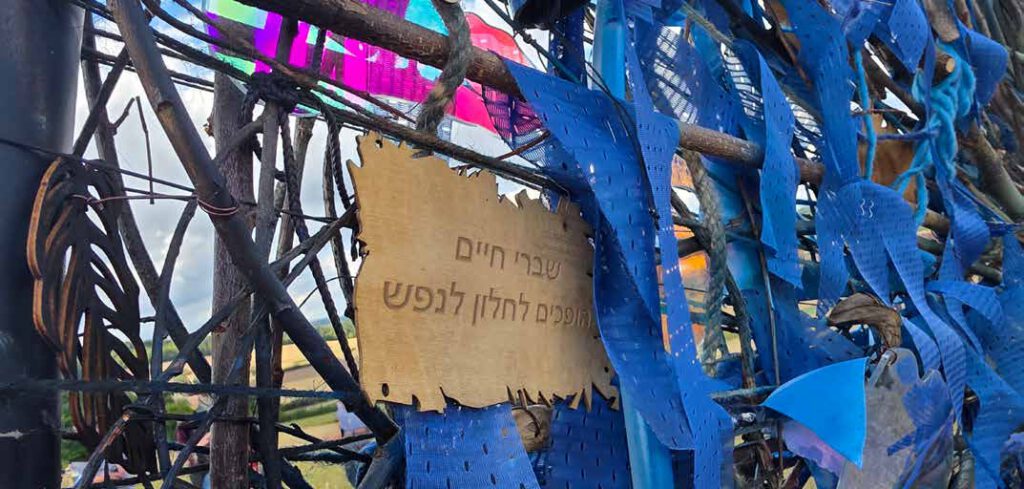
The wind has no border.
The wind carries what has no place.
AIRIS did not remain the same.
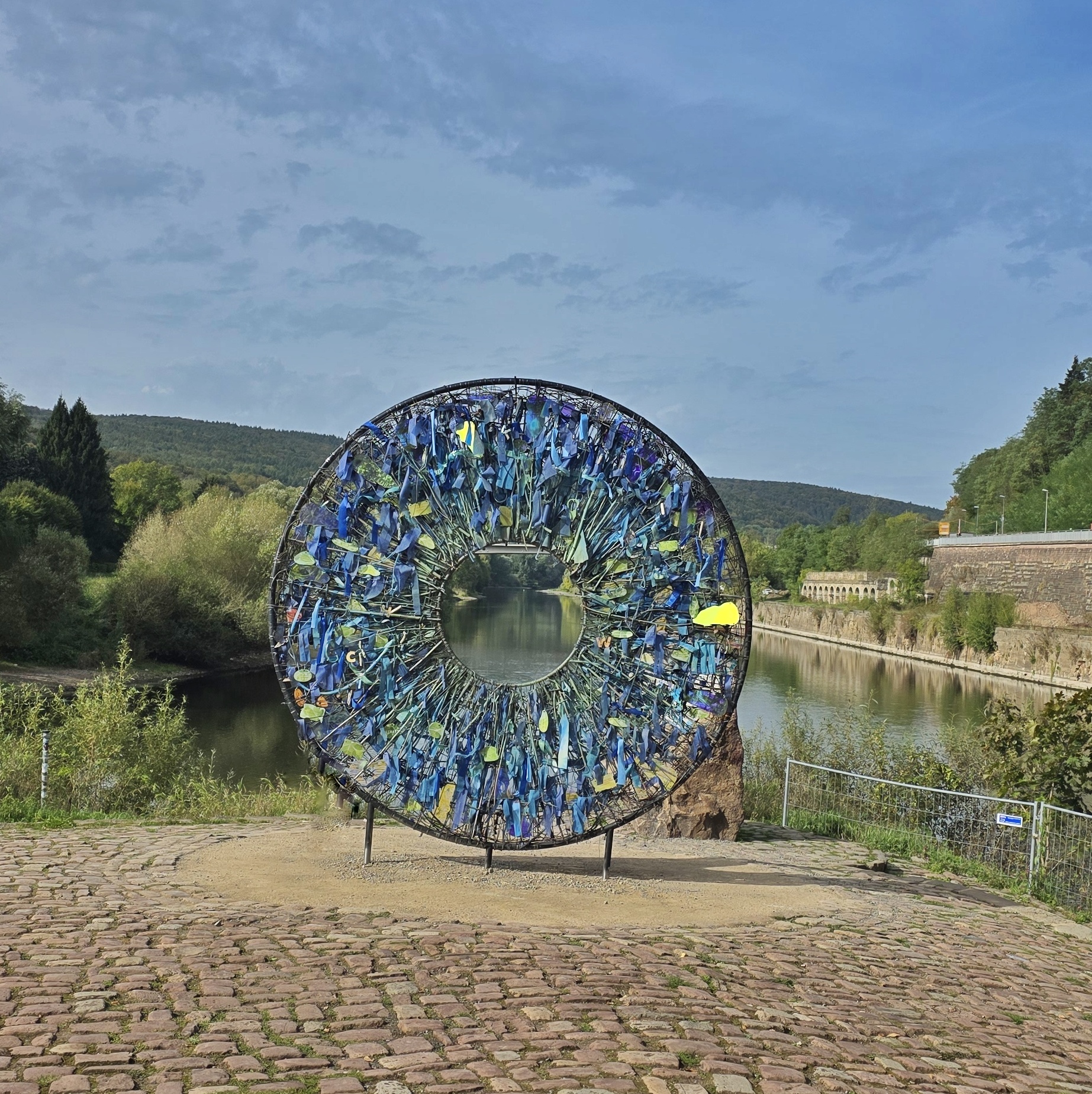
Weserstein · Hann. Münden · 2026
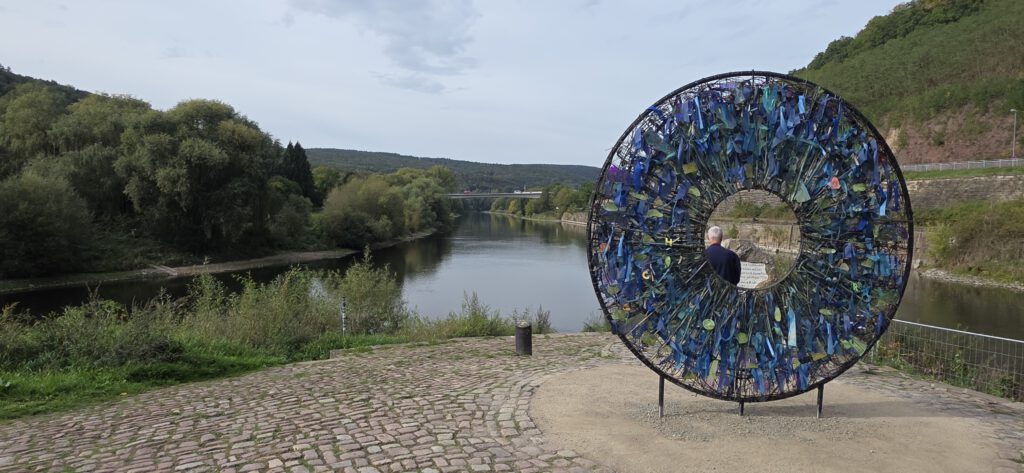
Now AIRIS encounters water.
At the Weserstein, AIRIS is part of the festival DENKMALKUNST – KUNSTDENKMAL.
At the Weserstein, the Werra and Fulda become the Weser.
Two landscapes. Two names.
Yet every river was already many.
What we call origin
is only where we start counting.
AIRIS looks downstream.
To where the Weser moves on toward the sea.
There, the counting stops.
כל הנחלים הולכים אל הים והים איננו מלא
Ecclesiastes (Kohelet) 1:7
All the rivers run into the sea; yet the sea is not full.
Wind moves.
Water carries.
It carries something from far away and takes something else with it.
It flows through landscapes, cities and histories. We give it names, draw borders, tell stories about beginnings and endings.
The water keeps flowing.
And with it, the thoughts of AIRIS change.
Questions of seeing become questions of living together.
It is not two rivers that meet here.
Many rivers meet here.
Many rivers. One water.
Two become one.
The one remains many.
But is that really true?
Do two ever become one?
What remains of what came before?
Does what flows together remain?
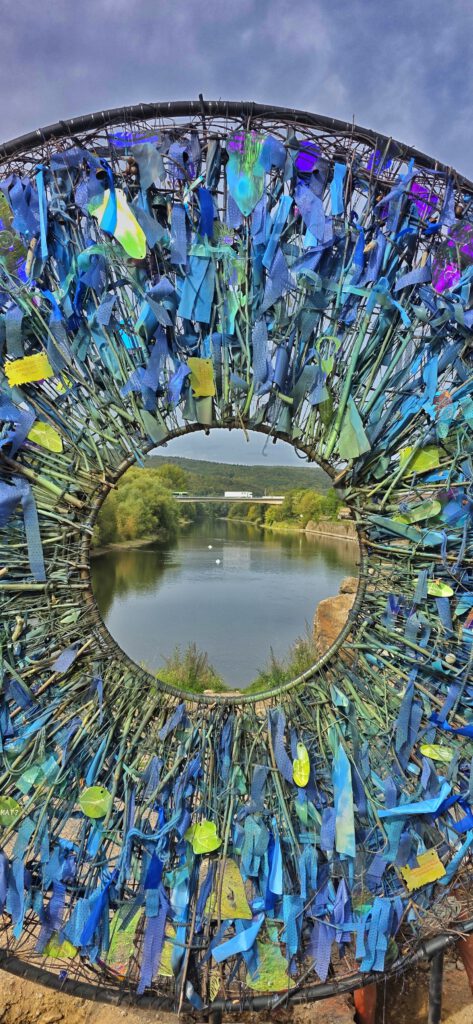
Or does something disappear?
What remains when the name disappears?
Where does one end and the other begin?
Who gives water its name?
Who owns a river?
Can water be a border?
Can a border flow?
Where do you begin?
Where do I begin?
At the Weserstein, these questions become more political.
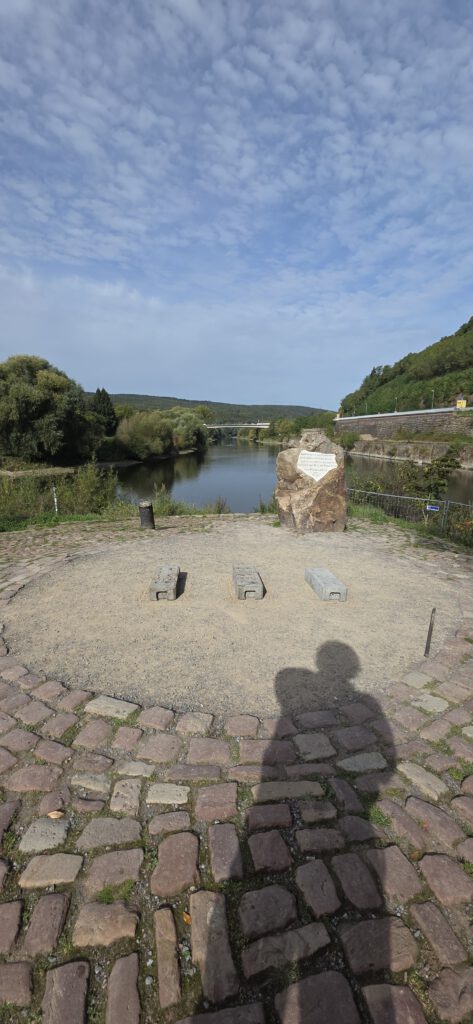
Not because AIRIS provides a political answer.
But because border, origin, name, strangeness and belonging become political when we transfer them from water to people.
The river does not make the questions easier.
It makes them more difficult.
Thoughts on Site
AIRIS carries thoughts from one place to another.
But they do not remain the same.
A sentence about wind means something different beside a river.
A thought about seeing changes when it encounters history.
My own sentences meet other voices Heraclitus, Ecclesiastes, Martin Buber, Hannah Arendt, Laozi and others.
Not because they explain AIRIS.
They contradict each other. Complete each other. Open new paths.
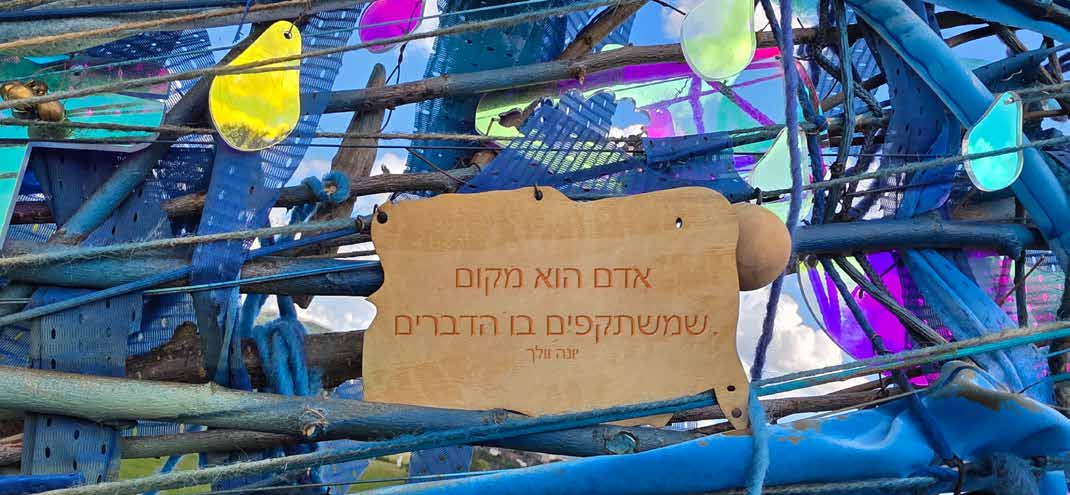
Some thoughts become plaques.
Others remain thoughts.
Perhaps they will return somewhere else.
AIRIS has more questions than answers.
Perhaps this is precisely where its political space begins:
not by telling us what to think,
but by creating a place where certainties can, for a moment, begin to flow.
Material · Traces · Remains
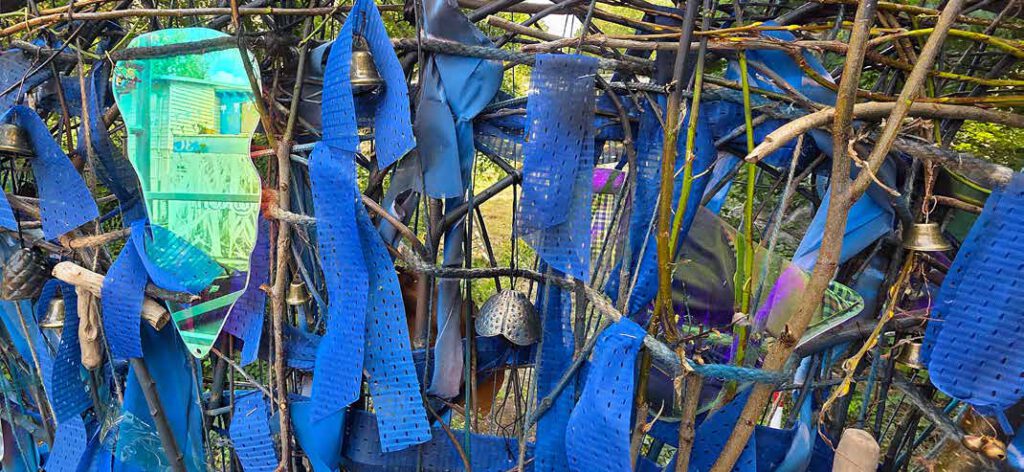
The material of AIRIS is also in motion.
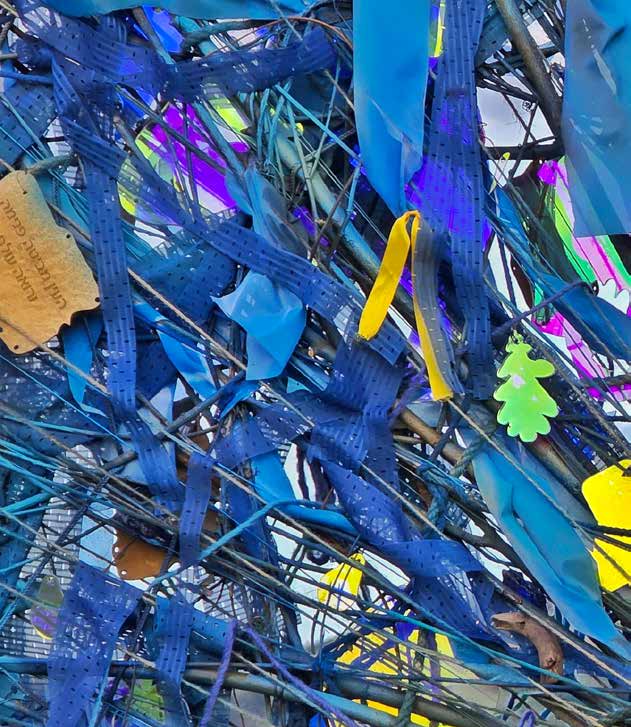
Found waste. Fabric remnants. Natural fragments. Production leftovers. Wood, acrylic glass and fragments from other works.
They are painted, printed, cut and engraved.
Materials that already carry a history are given another one.
Nothing has to remain forever.
Something is added.
Something disappears.
Something is found again.
AIRIS changes here too.
From the eye to the wind.
From wind to water.
From seeing to questioning.
And onward.
MiKi Z. Lazar · Hann. Münden · 2026
Where is AIRIS now?
At the Weserstein in Hann. Münden, on the tip of the Tanzwerder island where the Werra and Fulda meet and become the Weser. Part of the festival DENKMALKUNST – KUNSTDENKMAL.
Around twenty plaques carry thoughts, quotes and questions. Some are translated. Some are not.